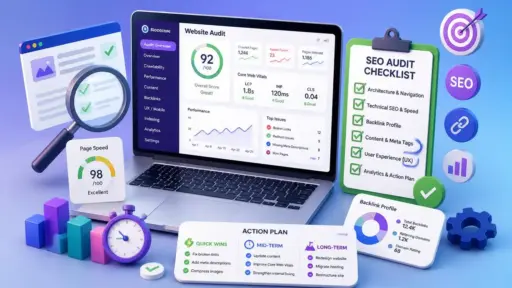
How to conduct a website audit in 6 steps

Google Ads Tests AI-Powered Campaign Localization for International Expansion

Google Updates Its Content Guidelines

In 2025, consumer behavior, retail competition, and the role of promotions have changed enough to impact the entire structure of peak season planning. Marketing teams operate in an environment of lower margins, cost pressures, and high price sensitivity. This requires a systematic approach to managing Performance Max campaigns and product advertising.
This article summarizes best practices from Google and advice from UAMASTER experts. They allow businesses to maintain control over performance and use peak season as an opportunity for growth, not a period of increased risk.
According to Google, shoppers in Europe are showing a strong inclination toward value-driven decisions. In Central European markets, consumer sentiment toward spending remains pessimistic. In Ukraine, due to the war and inflation, price sensitivity is even higher — though price is no longer the only decisive factor. Consumers compare more than ever, start their journey without brand loyalty, and expect:
This directly affects advertising performance and shapes the requirements for product feeds and promotional strategies.
Google’s data shows that Q4 demand spikes are now happening sooner. “Fake Friday” has become a familiar phenomenon. Consumers start researching and choosing deals well in advance, while Black Friday and Cyber Monday are only part of a broader seasonal wave.
For businesses, this means:
campaigns and promotions must be prepared earlier than in previous years.
Campaign Structure Aligned With Business Goals
A single campaign covering the entire product range results in a loss of control.
To manage profitability effectively, segmentation is required:
This approach enables the use of different target ROAS levels and ensures more precise investment control.
The most convenient way to implement segmentation is through custom labels within a unified product feed, or, if necessary, by creating several separate feeds.
During peak days, demand increases sharply. If a campaign is restricted by budget, the algorithm:
Google recommends demand-driven budgeting.
A flexible budget paired with a stable ROAS allows advertisers to capture the maximum amount of profitable traffic.
Even a 10–15% additional budget allocation helps secure growth and avoid losing evening peak hours.
In 2025, Performance Planner delivers significantly more accurate forecasting. It enables advertisers to:
Recommendation:
Review planning scenarios weekly in November and December to adjust strategy according to expected demand.
Feed data directly affects:
A strong feed includes:
Any mismatch between the feed and the website may lead to disapprovals or account-level restrictions
Annotations such as sale price, price drop, and promotion increase CTR by 5–10% and have a positive impact on auction ranking.
Before peak periods, businesses should:
Merchant Center provides analytics on:
This helps identify products where higher prices reduce competitiveness.
Key days in November include:
If campaigns are not prepared for evening spikes or stop due to budget limitations, the business loses the highest-quality traffic of the year.
Google and Mastercard report:
Recommendation:
Do not pause campaigns in December and avoid setting excessively high ROAS targets to prevent losing profitable sales.
With 80% of retail sales occurring offline, Performance Max enables businesses to:
This provides an additional conversion channel during periods when shipping deadlines are too tight before Christmas.
Plan promotions and campaigns in advance
Feed updates, creatives, and bidding strategies should be finalized before early November.
Align spending with demand, not budget restrictions
Budget flexibility determines impression share and volume of profitable sales.
Segment products by value
Use annotations and local promotions
Badges improve CTR and support higher conversion rates.
Monitor price competitiveness
Feed + price analytics + promotions = stronger auction performance.
Maintain creative relevance throughout the season
Refresh after BFCM, prepare for Christmas, and plan January sales assets.
Leverage Performance Max insights
Track recommendations, asset group statuses, and impression losses due to budget constraints.
Peak Season 2025 extends far beyond Black Friday. It represents a prolonged wave of demand that begins earlier and lasts longer. In such an environment, businesses need a structured system built upon:
Managing Google Shopping and Performance Max during peak season is not about reacting to changes — it requires preparation, control, and established processes that enable predictable results even on the most competitive days of the year.
Read this article in Ukrainian.
Say hello to us!
A leading global agency in Clutch's top-15, we've been mastering the digital space since 2004. With 9000+ projects delivered in 65 countries, our expertise is unparalleled.
Let's conquer challenges together!
performance_marketing_engineers/
performance_marketing_engineers/
performance_marketing_engineers/
performance_marketing_engineers/
performance_marketing_engineers/
performance_marketing_engineers/
performance_marketing_engineers/
performance_marketing_engineers/