How to Create YouTube Titles That Attract Attention and Increase Views

What has changed in the Microsoft Ads API and how will it affect advertising

Does Google penalize AI-generated content?

Changing audience behavior and the evolution of artificial intelligence algorithms require media organizations and businesses to rethink traditional approaches to content distribution. A traditional article is no longer the primary unit of content. To maintain and increase visibility in search engines (including Google SERP AI features and LLM platforms), it is necessary to adapt content processes to the concept of “liquid content.”
Liquid content consists of dynamic, adaptive structures that adjust in real time based on the user’s context, geolocation, time, and interaction patterns. Artificial intelligence enables the personalization of this content, requiring a shift from static publications to flexible, atomic content objects.
Traditional components of text content retain their value, but the way they are presented is changing:
Instead of being confined within the rigid structure of a standard article, these components are integrated into flexible distribution channels. The focus of value shifts from the article as a single entity to specific data and facts, microformatted for AI systems.
Multimodal content serves as the information layer that circulates within the “liquid content” distribution system. Its functionality is enabled by two fundamental components:
The strategic objective is to synchronize a company’s or publisher’s industry expertise with the preferred content consumption formats of a specific audience.
An example of multimodal content generation technology is Google Gemini Notebook (formerly NotebookLM). The platform is capable of converting primary analytical data, reports, or documents into a variety of output formats, including analytical briefs, infographics, interactive quizzes, podcasts, and presentation materials. Although the generation of complex visual assets (such as infographics) still requires additional quality control, the tool demonstrates high effectiveness for testing new content formats.
Implementing liquid content requires CMS platforms to automatically adapt core content for different distribution channels. However, this process should not be fully automated—maintaining human-in-the-loop oversight remains critical.
Instead of adapting content to fit a standard publishing format, the source content determines the final presentation format that will generate the strongest audience response. Building on experience with A/B testing of headlines, artificial intelligence enables split testing of distribution formats themselves.
The most challenging stage is building a personalization system. Modern AI technologies make it possible to adapt content formats to a user’s current needs and context in real time (for example, automatically providing an audio version of content for drivers or a concise text summary for public transport passengers).
The flexibility of “liquid content” requires clear organization so that artificial intelligence algorithms and large language models (LLMs) can accurately read, interpret, and cite content in their responses to users. Optimizing content for AI systems does not mean creating content exclusively for machines—well-structured content also improves the user experience (UX) for human audiences.
To enable AI bots to retrieve information effectively, the following practices are recommended:
Implementing liquid content enables media organizations and businesses to move away from dependence on third-party platforms and toward building their own distribution channels for unique data. Similar to the restaurant industry, where a fixed menu is replaced by an adaptive à la carte menu tailored to customer needs, digital resources (websites, newsletters, and apps) should adapt content formats to the individual preferences of users.
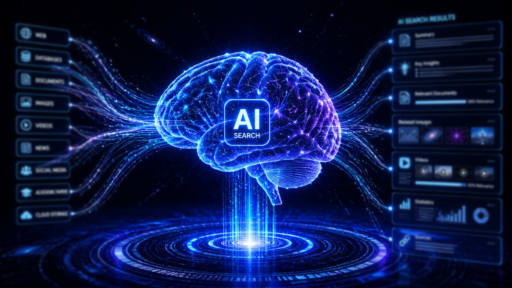
The evolution of AI search requires transforming the traditional article format into flexible, structured data repositories that can be easily interpreted by large language models (LLMs) and AI-powered search algorithms.
Strategically optimizing proprietary analytics, expertise, and unique datasets enables businesses not only to maintain visibility within the digital ecosystem but also to create new, high-value revenue streams through the monetization of their content assets.
Read this article in Ukrainian.
Say hello to us!
A leading global agency in Clutch's top-15, we've been mastering the digital space since 2004. With 9000+ projects delivered in 65 countries, our expertise is unparalleled.
Let's conquer challenges together!
performance_marketing_engineers/
performance_marketing_engineers/
performance_marketing_engineers/
performance_marketing_engineers/
performance_marketing_engineers/
performance_marketing_engineers/
performance_marketing_engineers/
performance_marketing_engineers/