How Website Migration Can Damage SEO Even Without Changing URLs

YouTube Algorithm Updates and New Monetization Features for Marketers

How to Optimize Instagram Videos for Better Search Visibility
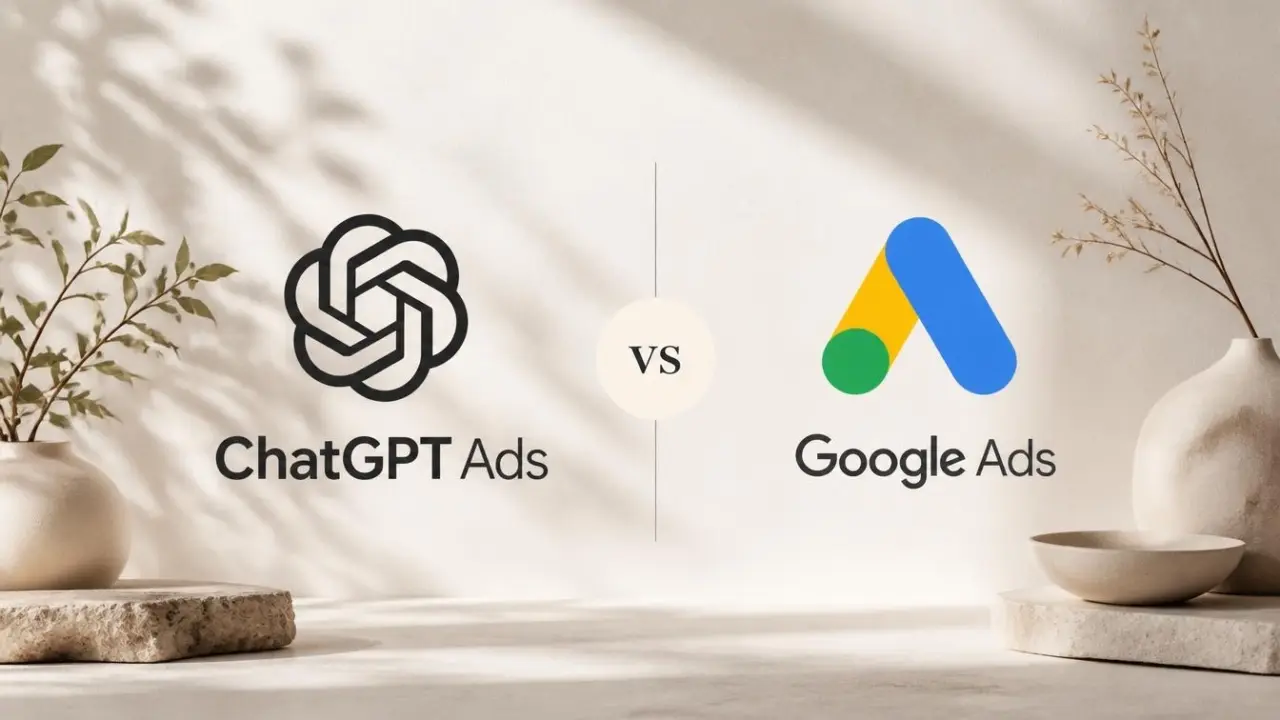
Advertising on ChatGPT is gradually emerging as a new channel for brands to engage with potential customers. It offers marketers an opportunity to reach audiences while they are researching information, exploring problems, and evaluating solutions. However, ChatGPT’s advertising platform is still significantly less mature than Google Ads in terms of targeting, analytics, and optimization capabilities.
Can ChatGPT Ads become a full-fledged alternative to Google Search advertising? Not yet. Nevertheless, for companies with established performance marketing strategies that are willing to experiment with new acquisition channels, this platform is worth exploring.
Let’s look at six key differences between ChatGPT Ads and Google Ads that marketers should consider when planning their advertising campaigns.
Despite the continued development of automation and algorithm-driven audience selection, Google Ads still provides advertisers with significantly more control over ad delivery.
Google Ads search campaigns primarily rely on keywords and user search intent. Advertisers can work with keyword match types, negative keywords, geographic targeting, audiences, and other settings to define when their ads appear more precisely.
ChatGPT Ads takes a different approach. The platform determines how relevant an advertising offer is to the context of a user’s conversation. Advertisers provide information about their products or services, their benefits, target audiences, and the problems they solve. Based on this information, the system determines whether an ad is relevant to a particular query.
For example, a company offering a CRM system for Ukrainian businesses might target keywords such as “CRM for an online store” or “CRM implementation for sales teams” in Google Ads.
In ChatGPT, a potential customer might describe the problem differently: “How can I automate order processing in my online store so that sales managers spend less time entering data manually?” The advertising system may recognize that a CRM solution is relevant even if the user does not explicitly mention the product.
In other words, Google Ads gives advertisers more tools to control ad delivery, while ChatGPT delegates much of that control to its algorithms.
This increases the importance of high-quality advertising inputs, a clear product description, a thorough understanding of audience needs, and relevant landing pages.
One of the most interesting features of ChatGPT advertising is the opportunity to engage users before they have formed a specific intention to purchase a product or service.
In traditional search, users often already know what they need. For example, someone might search for “buy a business laptop,” “order an SEO audit,” or “ERP implementation pricing.” These queries may indicate established demand and a willingness to consider specific offers.
ChatGPT users, however, often start by describing a problem rather than searching for a particular product or service.
For example, a manager at a Ukrainian manufacturing company might ask:
At this stage, the user may not yet know which software or service can solve the problem.
This scenario is particularly promising for B2B companies. Their sales cycles are often longer, and potential customers typically go through several stages: identifying a need, researching possible solutions, comparing providers, and making a final decision.
ChatGPT Ads potentially allows brands to reach audiences at different stages of this process, including the initial research phase.
For marketers, this means reconsidering how advertising messages are developed. Instead of focusing exclusively on product names or services, companies should consider the problems, needs, and use cases that lead potential customers to search for a solution.
The cost of acquiring traffic and how users interact with ads are among the key indicators for evaluating a new advertising channel.
According to the testing results described by the author of the original study, average cost per click (CPC) on ChatGPT Ads was comparable to Google Ads. However, user engagement and conversion volumes were significantly lower.
It is important to note that these results primarily relate to B2B clients whose audiences use ChatGPT to research problems and explore solutions at earlier stages of the purchase journey. Results for e-commerce businesses and products with shorter purchase cycles may differ.
This distinction affects how marketers should evaluate campaign performance.
In Google Ads, marketers often focus on conversions, cost per acquisition (CPA), return on ad spend (ROAS), and other metrics directly related to business outcomes.
When testing ChatGPT Ads, however, it may be more appropriate to pay closer attention to intermediate metrics:
A low number of conversions during the initial testing phase does not necessarily mean that the channel is ineffective. However, it makes evaluating its commercial potential more difficult.
Marketers should therefore distinguish between short-term testing results and the long-term effectiveness of the channel.
In performance marketing, generating clicks and conversions is only part of the job. Marketers also need to understand which factors influence campaign results.
Google Ads offers a well-developed reporting system that allows advertisers to analyze campaign performance by ad groups, keywords, search queries, audiences, and other parameters.
ChatGPT Ads currently provides more limited reporting capabilities. The platform offers core metrics, including CPC, CTR, and conversion data, but its reporting functionality does not yet match the level of detail available in Google Ads.
Another challenge is connecting advertising interactions to specific user conversations. Marketers have limited visibility into the exact context that triggered an ad and how that advertising exposure influenced the user’s subsequent purchasing decision.
This is particularly important for B2B companies, where the customer journey may involve multiple touchpoints: seeing an ad, visiting a website, reviewing case studies, requesting a consultation, and receiving a commercial proposal.
Under these circumstances, evaluating campaign performance requires more than the advertising platform’s built-in reporting. External analytics tools also play an important role.
For example, GA4, Google Tag Manager, and CRM systems can help track website behavior, record key actions, and analyze how leads progress through the sales process.
However, marketers should keep attribution limitations in mind. Even with properly configured analytics, it is not always possible to establish a direct connection between every advertising interaction and the final conversion.
Optimizing ChatGPT campaigns shares some similarities with Google Ads. Marketers test advertising messages, analyze results, and adjust campaign settings based on performance data.
However, the limited availability of conversion data changes the optimization approach.
In Google Ads, advertisers can use conversion-focused bidding strategies, target CPA, or target ROAS. When sufficient data is available, algorithms can learn from actual campaign outcomes and optimize delivery accordingly.
With ChatGPT Ads, relying on conversions as the primary optimization signal is currently more difficult. As a result, intermediate metrics such as CTR and CPC play a greater role.
In practice, campaign optimization may involve several areas:
Landing pages also deserve particular attention. Even when an advertising message matches the context of a user’s query, a landing page that fails to communicate the value of the offer or provide a clear next step may cause potential customers to leave without taking action.
Therefore, at the initial stage, ChatGPT Ads optimization requires greater attention to communication quality and intermediate performance metrics rather than conversion costs alone.
Despite the opportunities offered by ChatGPT advertising, Google Ads remains one of the key tools in performance marketing.
The platform has an established infrastructure, extensive campaign management capabilities, detailed reporting, and proven optimization approaches. For businesses already generating consistent results from Google Search and other Google advertising formats, replacing this channel with ChatGPT Ads would be premature.
Instead, ChatGPT Ads should be considered an additional acquisition channel and an opportunity to test new ways of engaging potential customers.
This approach is particularly relevant for companies that:
It is also important to understand that paid advertising on ChatGPT does not automatically increase a brand’s organic visibility in AI-generated responses. These are separate areas of marketing that can complement an overall AI visibility strategy but are not interchangeable.
When planning budgets, businesses should therefore maintain most of their investment in channels with proven performance while allocating a separate testing budget to ChatGPT Ads.
Moving into ChatGPT advertising does not mean marketers need to completely rethink their approach to paid promotion. Many performance marketing principles remain relevant, although the focus of campaign management is changing.
In traditional search advertising, keywords and the relevance of ads to search queries play a significant role. With ChatGPT Ads, understanding user intent, the context of their needs, and the ability of an advertising offer to address a specific situation become increasingly important.
For businesses, this means paying greater attention to:
ChatGPT Ads is a promising advertising tool that creates additional opportunities for businesses to engage audiences while they research problems and explore potential solutions. However, in terms of targeting, analytics, and optimization, it is not yet on the same level as Google Ads.
For medium-sized and large businesses, the most practical strategy at this stage is to combine established performance marketing channels with controlled testing of new advertising opportunities. This allows marketers to evaluate ChatGPT Ads based on actual performance data without compromising the effectiveness of their existing customer acquisition strategies.
Read this article in Ukrainian.
Say hello to us!
A leading global agency in Clutch's top-15, we've been mastering the digital space since 2004. With 9000+ projects delivered in 65 countries, our expertise is unparalleled.
Let's conquer challenges together!
performance_marketing_engineers/
performance_marketing_engineers/
performance_marketing_engineers/
performance_marketing_engineers/
performance_marketing_engineers/
performance_marketing_engineers/
performance_marketing_engineers/
performance_marketing_engineers/