How to conduct a website audit in 6 steps
Google Ads Tests AI-Powered Campaign Localization for International Expansion
Google Updates Its Content Guidelines
AI, Google, Reddit, YouTube, and official brand websites help resolve different types of uncertainty. Here is how this impacts search strategy development. Every week, new publications appear regarding the transformation of search.
Google’s position is weakening, while ChatGPT’s audience is growing rapidly. Reddit is turning into a high-trust platform, TikTok is gradually replacing Google for the younger generation, and YouTube has transformed into a full-fledged search engine. From the outside, it may seem that the search space is becoming increasingly fragmented, as consumers interact with brands across significantly more platforms than ever before.
However, analyzing these outcomes through this lens is flawed. The psychological foundations of search behavior remain unchanged. Users still seek to gain a clear understanding, find reassurance for their choice, fit into a social group, avoid mistakes, and feel confident they are making the right decision. What is changing is only the platforms people choose to build that confidence.
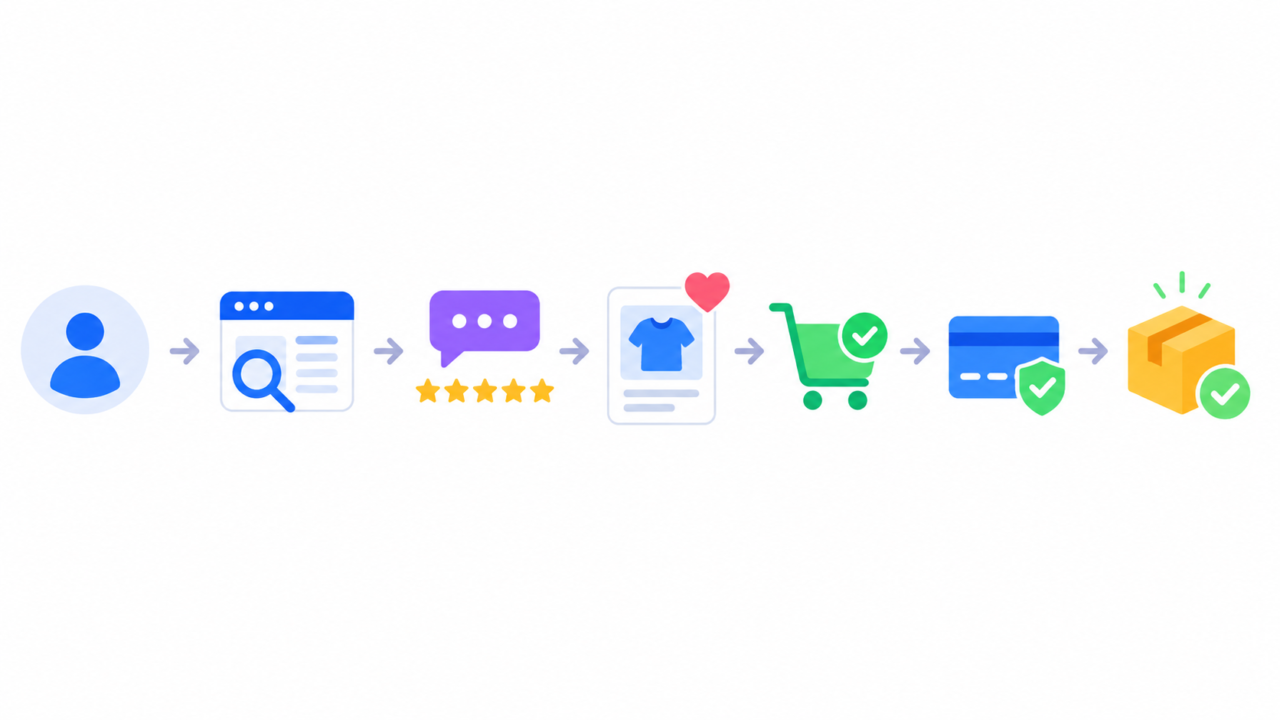
Marketers have spent years trying to understand the customer journey: building sales funnels, detailing chaotic intermediate stages, and visualizing touchpoints. All of these tools are still relevant today.
However, traditional customer journey mapping misses an important point. Users don’t consciously move from awareness to consideration and purchase, nor do they think in categories like “I’ll use Google now” or “I’m moving on to the evaluation stage.”
They simply eliminate uncertainty until they feel confident enough to take action. Each interaction closes a separate trust gap. This small shift in focus completely changes the way we understand modern search.
The research identified four key psychological factors that determine search behavior:
These motivations have always existed and have not changed with the emergence of artificial intelligence. What is changing is how different platforms satisfy these needs.
YouTube’s success is driven not only by the popularity of video content. Watching videos reduces uncertainty more effectively than text-based materials.
The value of Reddit lies not in its search engine capabilities. Communities provide a sense of confidence through the exchange of real-life experiences.
Artificial intelligence is most effective when users need to quickly understand a topic. Google remains a key tool for verifying information. Brand websites reinforce trust in the chosen company.
Platforms are becoming increasingly specialized in addressing specific consumer needs related to building trust
Most marketing departments are still structured around individual channels:
However, consumers do not think in these categories. They rely on trust signals, moving from one to another until they are ready to make a decision.
The main challenge for marketers is not choosing the most important channel, but understanding which doubts remain among the target audience and ensuring that they are fully addressed.
Any campaign planning should start with an analysis of trust factors. What kind of confidence does the audience need before making a purchase?
The answer depends on the context. A new customer needs different reassurance than a returning one. A CFO looks for completely different evidence than a marketing manager. The needs of a customer making a $20 transaction are significantly different from those of a company choosing a strategic B2B partner.
These include content assets that serve as evidence and reduce uncertainty:
Each of these elements addresses a specific information or trust gap.
This is where platforms come back into the analysis. Different audience segments look for specific types of validation across different sources.
The same Trustpilot review can influence a user’s decision through Google’s organic search results, an AI-generated answer, directly on the company’s website, or during a visit to Trustpilot.
The key asset remains the same — only the point of discovery changes.
Analytics approaches need to evolve. Some confidence indicators can be tracked directly:
However, trust is increasingly built on platforms where precise attribution is impossible. A user may browse Reddit before searching for a brand, watch a review on YouTube, ask ChatGPT to compare providers, or see your research cited in an AI assistant’s response.
These touchpoints directly influence purchasing decisions, even if they do not appear in analytics systems.
They are critical, which means evaluating every trust-building activity exclusively through performance marketing metrics is no longer sufficient.
Some content assets are designed to generate clicks, while others are created to eliminate doubts. Both categories contribute equally to business growth.
As artificial intelligence continues to evolve and zero-click search becomes more widespread, marketers will lose the ability to track certain parts of the customer journey.
At the same time, we can still understand how trust is built.
This requires a shift in mindset:
Instead of asking:
“What specific channel generated the conversion?”
We should ask:
“What trust gaps did our marketing activities help address?”
The search landscape is becoming fragmented across different platforms, but users’ fundamental needs remain unchanged.
Today, people find answers to their questions by turning to more sources than ever before.
The brands that will succeed are those that understand the principles of building trust and ensure their presence wherever the customer’s need arises.
Read this article in Ukrainian.
Say hello to us!
A leading global agency in Clutch's top-15, we've been mastering the digital space since 2004. With 9000+ projects delivered in 65 countries, our expertise is unparalleled.
Let's conquer challenges together!
performance_marketing_engineers/
performance_marketing_engineers/
performance_marketing_engineers/
performance_marketing_engineers/
performance_marketing_engineers/
performance_marketing_engineers/
performance_marketing_engineers/
performance_marketing_engineers/