Google Updates Its Content Guidelines

Microsoft Advertising integrates with HubSpot ahead of the holiday season
Google expands cross-channel reporting for app conversions
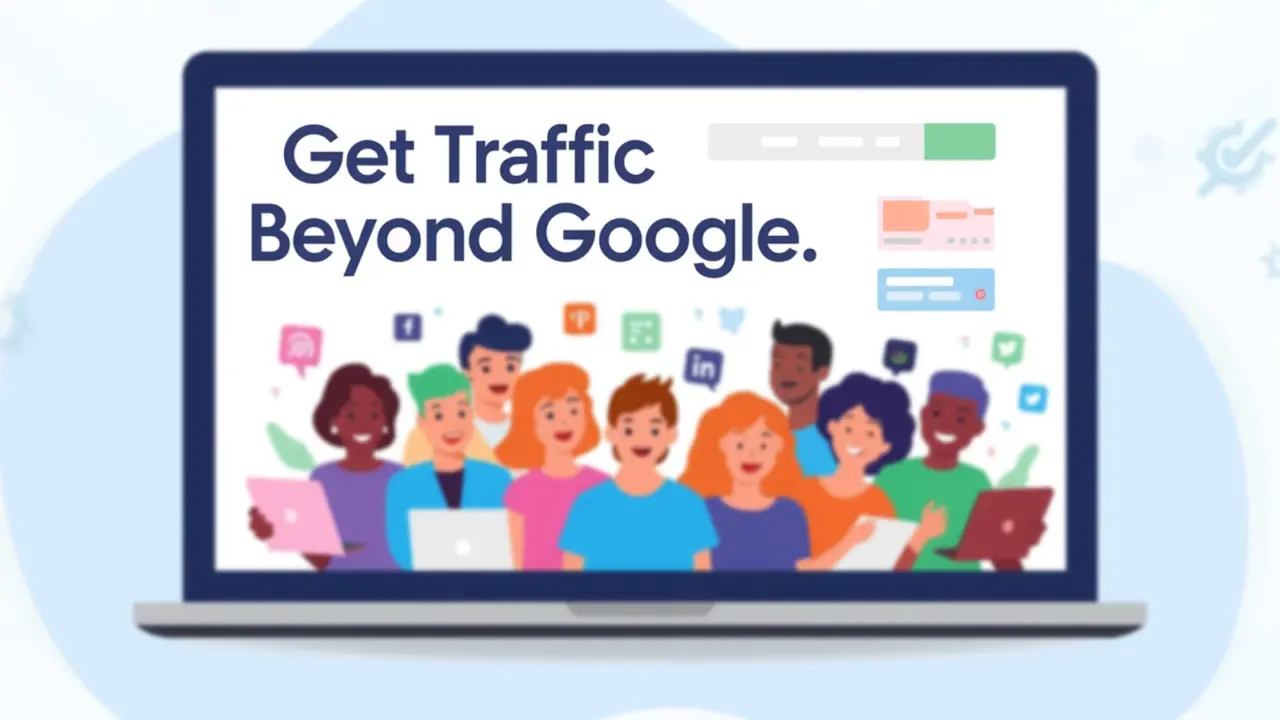
The reduction of organic traffic from Google increasingly affects publishers and affiliate marketers. The search ecosystem is evolving: Google’s AI Overviews increasingly display affiliate content without directing traffic back to the original sites, leading to fewer clicks and a loss of traffic for publishers.
At the same time, this does not signify the end of affiliate marketing. On the contrary, the situation underscores the importance of diversifying traffic sources. Affiliate businesses are not required to rely solely on Google as their primary channel for attracting an audience.
At the start of the new year, it is advisable to focus on alternative traffic sources and monetization strategies that allow business growth while staying within one’s expertise and preferred niche. The author regularly works with partners using such strategies.
Platforms such as Skool allow the launch of online courses or the creation of full-fledged communities with access to text content, video, newsletters, and interactive tools. Thanks to their flexibility and focus on creators and educational projects, these platforms are quickly gaining market share.
Unlike large, established players, smaller educational platforms provide creators with significantly more freedom in terms of monetization. They are more creator-friendly because they allow not only content creation but also ownership of the community while simultaneously developing a personal brand and business.
On these platforms, courses can be created and sold on virtually any topic — from launching a photography business or learning calligraphy to cooking courses or preparation for exams and professional certifications. The creator fully controls the access model: courses can be either free or paid, as well as the format and volume of content delivered to participants.
A key advantage is the ability to use affiliate links and an integrated email system. Email campaigns can be used to convert free users into paying customers, sell additional courses after completing the main course, or bring students back to continue a course they have already paid for.
In practice, these platforms are suitable for almost any niche: from credit repair and business launch to acquiring new skills or professional development in any field.
According to Semrush data as of December 27, 2025, the Skool brand receives approximately 110,000 monthly search queries, of which 33,000 go to the login page. This indicates an established active audience and significant potential for course and community growth leveraging the platform’s existing ecosystem.
There is a renewed interest in offline advertising within the affiliate channel.
Beyond the practices employed by large affiliates with linked credit cards, affiliate sites have begun running TV ads and using traditional media channels to generate traffic.
There is also an increase in engagement from consultants, conference speakers, and small businesses using QR codes with affiliate links for upsells or promoting complementary companies in retail locations.
Affiliate links can even be found on bulletin board advertisements.
Workshop leaders and conference speakers increasingly integrate affiliate links directly into presentations.
In cases where a specialist regularly recommends a product or service, some partners place the corresponding links on business cards, monetizing existing referrals and generating additional revenue.
One tactic that is currently rarely implemented but has high potential is placing a QR code with a link on the back of a T-shirt.
This approach can be effective for humorous content or impulse-purchase items, especially in airports and other high-footfall locations. The format directly appeals to people’s natural curiosity and encourages spontaneous interaction with the brand or offer.
The QR code can lead to a page selling novelty T-shirts, impulse-buy products, subscriptions like “joke of the day,” or free content for leisure during travel. For example, this can provide useful or entertaining content for passengers in airports or train stations.
Additionally, this tool can be used to promote mobile applications with popular games for tablets and smartphones, targeted at travelers. Overall, offline promotion using QR codes offers virtually unlimited opportunities and opens additional channels for audience engagement.
Brands are returning en masse to the affiliate channel by investing in reward programs and developing partner portals.
Within these portals, companies list complementary businesses and use affiliate links to redirect users, earning commission fees.
These portals also help businesses identify partners for cross-promotion via email campaigns, blog content, social media, and other co-marketing formats.
Current practices include:
Affiliate marketing of software and cashback platforms is also being placed on post-purchase “thank you” pages through ad networks.
There are few better places to engage a shopper than inside a brand’s own shopping cart. If the brand allows such placement, it actively opens this channel.
A key factor for success is having an existing audience.
If an audience is already established, working with brands in a cross-promotion format is advisable.
One effective approach is creating an educational course that complements a brand’s product or service, followed by placing this course in the company’s partner portal.
In exchange for being featured in the portal, one can promote the brand’s products to their audience or run email campaigns in return for several months of visibility within the brand’s partner ecosystem.
Niche or industry experts can create additional value for the brand’s users, especially if the course supports an upsell that the brand struggles to convert independently.
In this model, the brand leverages the partner’s expertise as a trust-building factor, while its previously non-converting audience receives additional guidance and may complete a purchase.
As a result, the brand gains higher-value customers without having to tackle complex conversion challenges on its own.
Traditional channels — social media and SEO — remain available.
However, when search engines generate fewer clicks, creativity becomes the deciding factor.
It is important to reconsider where traffic can be found and how visitors can be directed to affiliate links. The only real limitation in this process is the level of one’s creativity.
Read this article in Ukrainian.
Say hello to us!
A leading global agency in Clutch's top-15, we've been mastering the digital space since 2004. With 9000+ projects delivered in 65 countries, our expertise is unparalleled.
Let's conquer challenges together!
performance_marketing_engineers/
performance_marketing_engineers/
performance_marketing_engineers/
performance_marketing_engineers/
performance_marketing_engineers/
performance_marketing_engineers/
performance_marketing_engineers/
performance_marketing_engineers/