
Localization of E-E-A-T Factors in the Era of AI-Powered Search

How to Avoid Fatal Mistakes with Your Performance Max Structure

Google Expands Conversion Lift to Search and Performance Max Campaigns
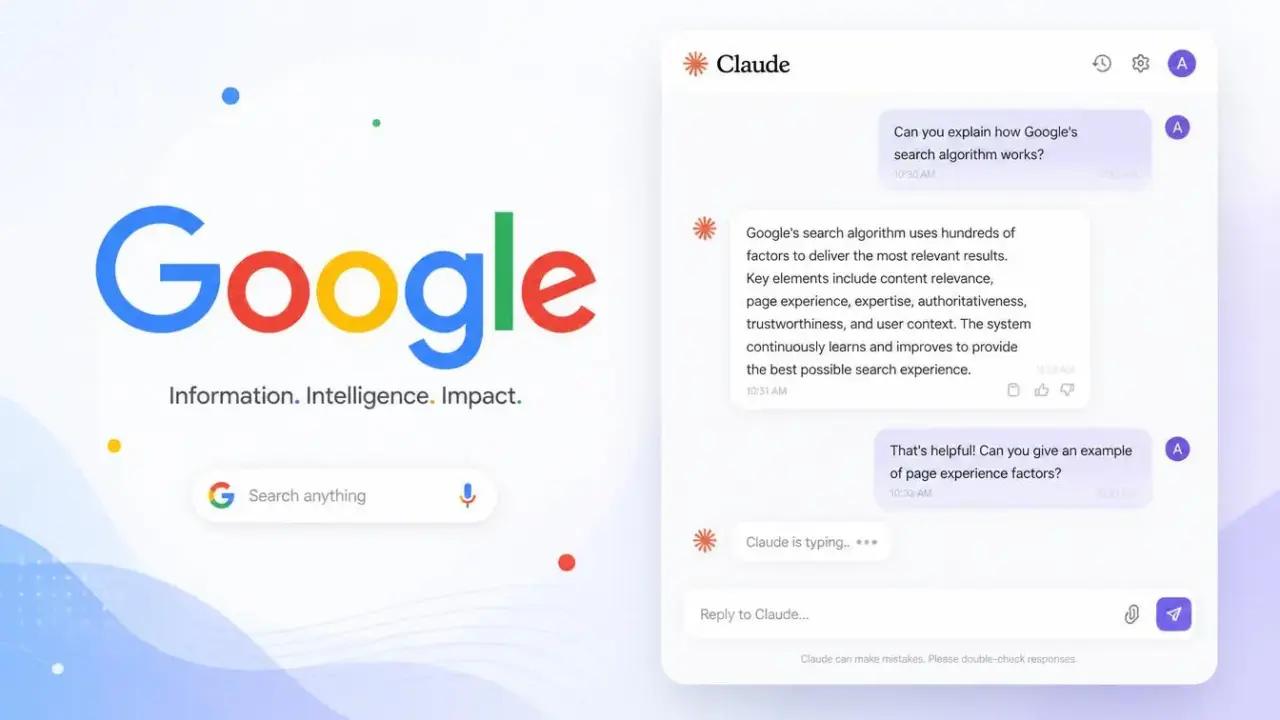
It recently became known that Google, Bing, and other search engines indexed public links to chats created on Anthropic’s AI platform, Claude. As a result, conversations containing sensitive topics—including health, politics, and personal information—became accessible through search engine results.
The incident was not caused by a flaw in the search engines themselves, but by incorrect implementation of mechanisms intended to prevent pages from being indexed.
Claude allows users to create public snapshots of individual conversations that can be shared with others. If these pages are accessible to search engine crawlers and are not properly configured to restrict indexing, they may appear in search results.
This is exactly what happened: search engines indexed hundreds of Claude chat pages that became discoverable through standard search queries.
After the issue received public attention, the indexed pages were removed from search engine results.
One of the main reasons behind the incident was the incorrect use of indexing controls.
Many website owners mistakenly believe that blocking a page in the robots.txt file is sufficient. In reality, robots.txt only prevents search engine crawlers from accessing a page; it does not guarantee that the page will be excluded from search results.
If a search engine already knows about a page—for example, through external links—it may still index the URL even without accessing its content.
To completely exclude a page from the search index, the noindex directive must be used. However, the page must remain accessible to crawlers; otherwise, they cannot detect the noindex directive.
Google explicitly states in its documentation that if a page is blocked by robots.txt, the crawler cannot see the noindex tag, meaning the page may still appear in search results.
Google emphasized that search engines do not decide which pages should be publicly available.
According to Ned Adriance, spokesperson for the Google Search team, Google provides website owners with clear tools to control crawling and indexing and fully respects the directives they implement. If a page is publicly accessible and lacks the appropriate indexing restrictions, it may be indexed not only by Google but also by other search engines.
For organizations managing large volumes of digital content, this incident serves as an important reminder of the need for proper technical SEO implementation and effective control over page visibility.
Particular attention should be paid to:
If such pages become visible in search engine results, businesses may face information leaks, reputational damage, and violations of internal security policies.
To minimize risks, organizations should regularly perform technical SEO audits and verify:
In addition, it is advisable to periodically use search operators such as site: to identify pages that may have already been indexed unintentionally.
The Claude incident demonstrates that even leading technology companies can make mistakes when configuring indexing rules. For businesses, it reinforces an important lesson: managing content visibility is not only an SEO responsibility but also a critical component of information security.
Regular technical SEO audits, proper implementation of indexing directives, and continuous monitoring of publicly accessible pages can help prevent confidential information from becoming discoverable through Google, Bing, or other search engines.
This article is available in Ukrainian.
Say hello to us!
A leading global agency in Clutch's top-15, we've been mastering the digital space since 2004. With 9000+ projects delivered in 65 countries, our expertise is unparalleled.
Let's conquer challenges together!
performance_marketing_engineers/
performance_marketing_engineers/
performance_marketing_engineers/
performance_marketing_engineers/
performance_marketing_engineers/
performance_marketing_engineers/
performance_marketing_engineers/
performance_marketing_engineers/