
Localization of E-E-A-T Factors in the Era of AI-Powered Search
How to Avoid Fatal Mistakes with Your Performance Max Structure
Google Expands Conversion Lift to Search and Performance Max Campaigns
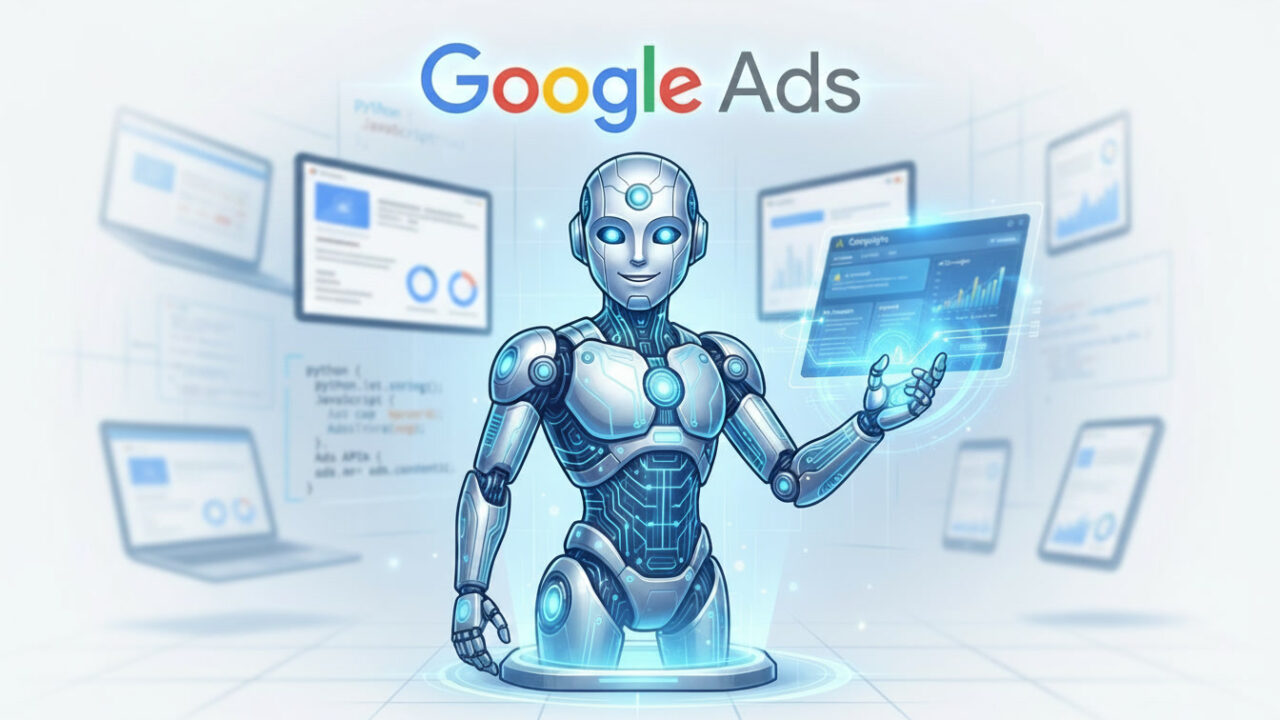
The rapid development of AI agent systems creates the impression that businesses need to automate all marketing processes immediately. However, practical experience in developing AI tools for Google Ads shows that autonomous agents can deliver sustainable commercial value only when the organization has the right foundations in place.
Attempting to accelerate the process without adequate preparation often results in inefficient use of resources and advertising budgets.
Implementing AI requires an initial investment of resources in two key areas: establishing a corporate knowledge base and consolidating marketing and analytics data.
AI does not scale chaotic processes — it simply accelerates them. The effectiveness of any AI system depends primarily on the quality of the context it receives, rather than solely on its technical capabilities. To make informed decisions, an AI system needs access to structured, digitized, and reliable business information.
At the same time, businesses need to ensure high-quality marketing data. Removing systemic barriers between channels and consolidating analytics — for example, in BigQuery or a similar data warehouse — is a critical prerequisite for providing AI systems with a complete and reliable dataset.
A well-structured data environment allows AI systems to work with a unified view of marketing performance rather than isolated metrics from individual platforms.
This foundation should be established before introducing autonomous AI agents into Google Ads management. Only when the underlying processes, data, and business rules are clearly defined can AI automation become a reliable tool for improving campaign efficiency rather than simply accelerating existing inefficiencies.
Gaining practical value from artificial intelligence does not require immediately involving a development team. Many Google Ads specialists have yet to fully leverage the capabilities of software already available on the market, often underestimating what modern AI-powered tools can do.
A Step-by-Step Approach to Using Existing AI Solutions
For a significant number of companies, this configuration can cover most day-to-day operational requirements. Developing custom AI agents becomes worthwhile only after the capabilities of existing tools and integrations have been fully utilized.
The priority should therefore be to maximize the value of proven AI solutions before investing in the development and maintenance of proprietary AI infrastructure.
The need for custom software arises when standard tools can no longer meet the specific requirements of a business.
Factors That Determine Whether Custom Development Is Justified
Custom development can significantly improve the reliability and scalability of AI systems. Combining tailored MCP connections, guardrails, workflow orchestration, scheduled execution, and cost optimization can transform a conceptual prototype into a stable system suitable for everyday business operations.
The key barrier to successful AI adoption is often the human factor rather than technological limitations.
A Strategy for Working with the Team
Artificial intelligence does not replace marketers; it changes where they create value.
Much like the evolution of advertising technologies such as Smart Bidding, broad match, and Performance Max, agentic AI represents the next stage of marketing automation. The role of the specialist is gradually shifting away from manually executing routine tasks toward strategic planning, decision-making, and expert evaluation.
The competitive advantage will therefore belong not simply to companies that adopt AI first, but to those that build the right infrastructure, processes, and organizational capabilities to use it effectively at scale.
One of the biggest mistakes when integrating artificial intelligence is attempting to fully automate every aspect of Google Ads management. This approach does not necessarily create meaningful commercial value.
Agentic AI systems are most effective at handling repetitive, data-intensive operations such as account audits, performance monitoring, trend analysis, and identifying growth opportunities. By freeing qualified marketers from routine manual work, businesses can redirect their expertise toward strategic planning, creative problem-solving, and achieving broader business objectives.
The companies that gain a competitive advantage will not necessarily be those that deploy the most sophisticated AI agents. Instead, it will be those that clearly identify where AI can deliver the greatest efficiency, preserve the critical role of human expertise and judgment, and build the infrastructure needed to combine the two effectively.
For this reason, the first priority should not be to automate as many processes as possible, but to prepare the organization for effective collaboration with agentic AI systems.
The goal is not to replace the strategist with AI, but to give the strategist better tools to make faster, more informed, and higher-impact decisions.
Read this article in Ukrainian.
Say hello to us!
A leading global agency in Clutch's top-15, we've been mastering the digital space since 2004. With 9000+ projects delivered in 65 countries, our expertise is unparalleled.
Let's conquer challenges together!
performance_marketing_engineers/
performance_marketing_engineers/
performance_marketing_engineers/
performance_marketing_engineers/
performance_marketing_engineers/
performance_marketing_engineers/
performance_marketing_engineers/
performance_marketing_engineers/