Google Demand Gen Without Wasting Budget
How to Make Your Business the Obvious Choice in Google Ask Maps

What Meta’s New Advertising Formats Mean for Your Business
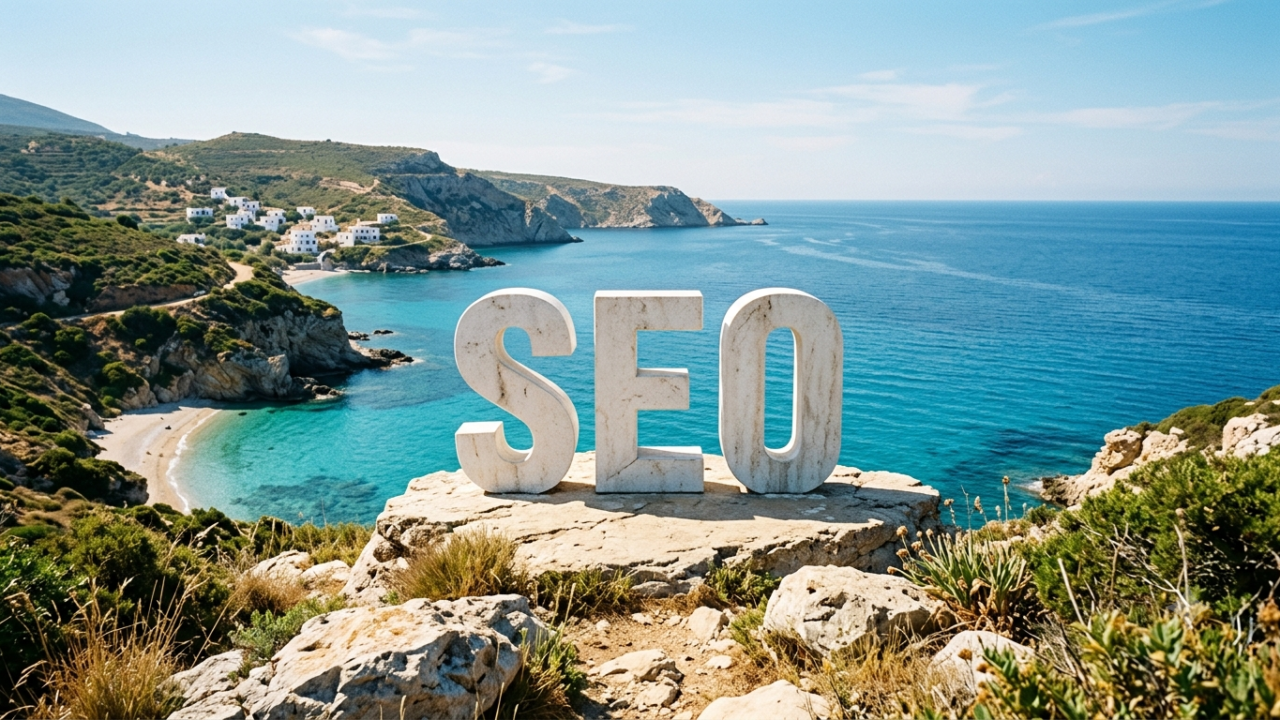
Applying standard search engine optimization (SEO) methods to travel platforms is often ineffective and leads to inefficient budget allocation. Common recommendations are largely designed for market sectors where traditional text links dominate search engine results pages (SERPs).
Different algorithms operate in the tourism segment because Google acts not only as a search tool but also as a direct commercial competitor, a visual aggregator, and the primary regulator of content visibility. To ensure a stable flow of bookings, travel brands must abandon classic organic strategies in favor of specialized tools, including: product feed management, entity optimization, and modular content creation.
A successful promotion strategy in this niche requires adaptation to the following key factors:
In most industries, the classic goal of search engine optimization is to achieve high rankings for text links in organic search. However, in the travel sector—particularly in segments with a high level of transactional user readiness (searching for flights, hotels, excursions, etc.)—the traditional text-based search results format has effectively lost its relevance. This trend is further amplified by the integration of artificial intelligence, AI tools in search results (AI Overviews), and other large language models competing for audience attention.
A prime example is search queries like “flights London to Rome” or “boutique hotels in Edinburgh,” where the first screens of search results are completely dominated by Google’s own interactive services. Below these sit local map packs, advertisements, and massive aggregator blocks (“Find results on”), implemented in the UK and Europe in compliance with antitrust laws.
Given this, effective optimization in tourism shifts the focus from direct content creation to product feed management and entity optimization:
Classic search campaigns are based on the presupposition that organic traffic must be directed straight to the company’s own domain to achieve a measurable commercial result. However, in the travel industry, this isolated approach overlooks the behavior of modern users—particularly younger age groups—who require visual confirmation of information before making a booking. In response to these shifts, Google has transformed its search results pages into visual aggregators that import content directly from external social networks.
For informational and exploratory queries (such as “best rooftop bars in Soho” or “hidden beaches in Cornwall”), Google integrates specialized carousels of short videos (Short Videos) and subjective experience blocks (Perspectives) directly into the main search results. These tools display short video content from platforms like TikTok, Instagram Reels, and YouTube Shorts, allowing users to view relevant user-generated content (UGC) without needing to navigate to traditional websites. Since search engines actively index public posts from business pages on Meta networks, social media updates are integrated directly into the SERP structures and AI-generated summaries (AI Overviews).
Consequently, travel SEO is no longer confined within the boundaries of a corporate content management system (CMS). To capture visual traffic, marketing departments must treat their social media profiles as distributed landing pages. This approach is further validated by the implementation of social and video content analytics tools within the Google Search Console dashboard.
Typical content marketing recommendations for the B2B or consumer services sectors focus on creating long-form content. It is assumed that a several-thousand-word article establishes the resource’s topical authority and gradually guides the user through the conversion funnel. However, in the travel segment, this approach leads to high bounce rates and low conversion rates. Travel planning is a non-linear process characterized by strong visual and emotional components, as well as highly fragmented multi-device usage. Users are not inclined to read lengthy text blocks on mobile devices while on the go.
A search query like “things to do in Cornwall” typically indicates a need for quick ideas, geographic clustering of locations, and immediate practical utility. When faced with long introductions and dense paragraphs of text, the user returns to the search results. Therefore, travel content must focus on rapid utility rather than word count. Instead of writing essays, it is more practical to implement interactive modular components:
This structure significantly simplifies Google’s data extraction process for generating AI Overviews and visual carousels. The primary goal becomes providing structured, high-value answers that algorithms can easily interpret. When a web resource functions as a practical tool rather than an online magazine, user trust in the brand increases, driving bookmarks and future transactions.
Achieving results in travel search requires a conceptual shift in analytical approaches. Campaign success can no longer be measured solely by standard keyword rankings or overall organic traffic volume. Performance evaluation should be based on the following criteria:
Abandoning one-size-fits-all SEO templates in favor of integrating technical data feeds, adhering to pricing transparency regulations, and implementing modular interfaces allows travel brands to build a sustainable competitive advantage in a highly competitive environment.
Read this article in Ukrainian.
Say hello to us!
A leading global agency in Clutch's top-15, we've been mastering the digital space since 2004. With 9000+ projects delivered in 65 countries, our expertise is unparalleled.
Let's conquer challenges together!
performance_marketing_engineers/
performance_marketing_engineers/
performance_marketing_engineers/
performance_marketing_engineers/
performance_marketing_engineers/
performance_marketing_engineers/
performance_marketing_engineers/
performance_marketing_engineers/